The Paperwork a Tenant-Occupied Listing Needs Before It Goes Live
A buyer, their lender and their attorney will all ask you for the same file. Build it before the photographer books, not after the offer lands.
By Moe Hannon, Realtor · Ellyn & Main at KW Premiere Properties, Elmhurst IL · Updated September 2026
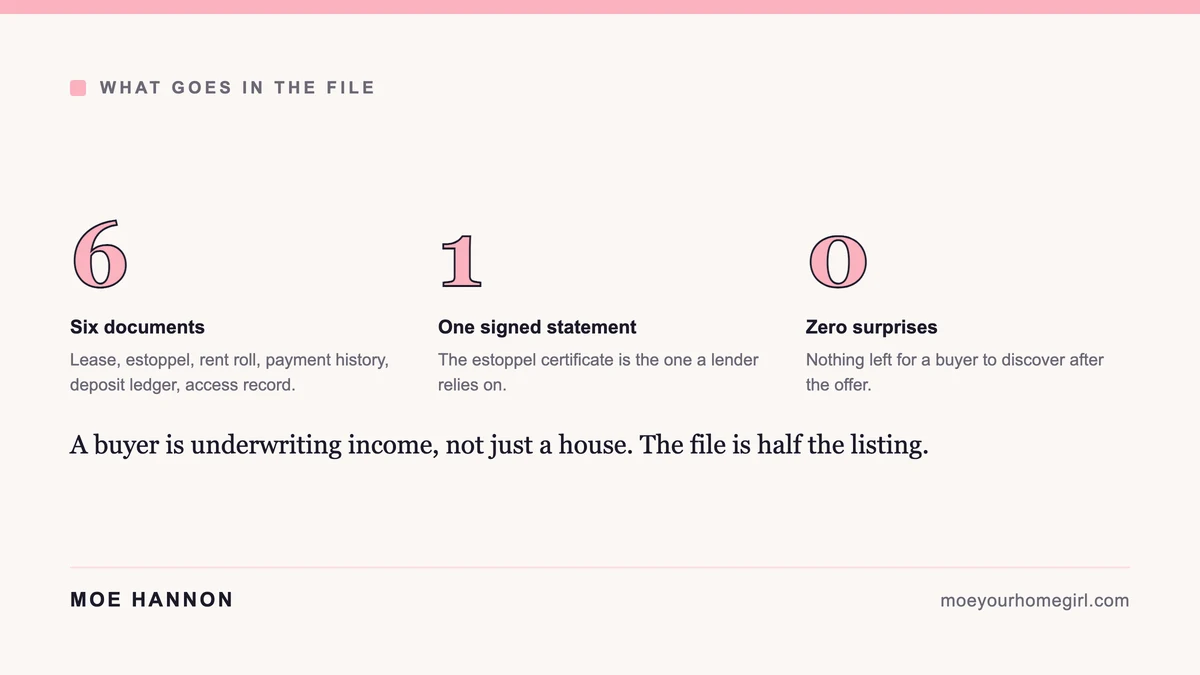
- The lease travels with the house. A buyer takes the property subject to the tenancy that already exists, so the lease and every amendment is the first thing in the file.
- The estoppel certificate is the one buyers rely on. It is the tenant's own signed statement of rent, term and deposit, and it outranks your word on all three.
- A buyer is underwriting income, not just a house. A rent roll and a payment history do work that listing photographs cannot.
- The deposit is a liability you are handing over. Illinois has statutes on returning deposits and on interest, and the ledger has to be clean before closing.
- Assemble it before launch. Every day spent chasing a document after an offer is a day the buyer spends re-reading their inspection contingency.
This one is written for you, the owner. If you have a house in DuPage County with a tenant in it and you are weighing a sale, the documents needed to sell a tenant occupied property are what decides whether it feels straightforward or awful, and whether the file was ready before the listing went live.
Almost nobody publishes that file. Search the question and you get fifty-state notice tables and a stack of pages written by people who would like to buy the house off you before it ever reaches the market. Neither tells you what to put in a folder. So here is the folder, in the order I build it. I am a realtor and not an attorney, and leases are legal documents, so have your own lawyer read anything you are unsure about.
Start with the lease, and every amendment to it
The lease is the first document and it decides most of the rest. A buyer needs the signed original, every written amendment, and any renewal or extension executed since. Illinois sets the baseline for the relationship itself in the Landlord and Tenant Act, but your lease is what a buyer reads first. The term and the expiry date matter more than anything else in there, because between them they decide which exit paths a buyer even has.
The thing that catches owners out is the informal variation. If you agreed by text that rent moves to a different day of the month, or that the tenant keeps the garage, or that a dog arrived two years ago, that arrangement is part of the deal in practice even though it never made it into the signed lease. Write it down and disclose it. A buyer who finds it after closing has a problem with you, not with the tenant.
If the property came to you through an estate rather than being bought as a rental, the sequence starts somewhere else entirely, and that is the probate and estate side of things. The first number an estate needs is the value as of the date of death, and that figure is rarely what the house sells for.
The estoppel certificate, and why a lender trusts it over you
An estoppel certificate is a short document the tenant signs confirming the facts of their own tenancy. What the rent is, when the term ends, how much deposit is held, whether anything is owed in either direction, and whether they have any claim against the landlord.
It exists because a buyer and their lender cannot verify a tenancy from the seller's paperwork alone. The lease says what was agreed years ago. The estoppel says what is true today, in the tenant's own words, and that is the version an attorney will lean on. Getting it signed takes a polite conversation and about a week of lead time, which is exactly why it belongs in the pre-launch file rather than in the middle of attorney review.
The rent roll and the payment history
If your buyer is an investor, this is the part of the listing they read first. A rent roll sets out what is owed, what is collected and when it arrives. The payment history shows whether that has been true for the last twelve months or whether it is aspirational.
Present it honestly, late payments included. A history with a few late months and a plain explanation is an ordinary rental. A history that turns out to have been tidied up is how a deal dies in its last week, and it is precisely the sort of thing a buyer's attorney goes looking for.
Start early on the two documents you do not control. The estoppel needs your tenant to read it and sign it, and the deposit interest figure may need your bank or your property manager to confirm it. Begin both the week you decide to sell rather than the week you list. Those two are the ones that hold up a closing when they arrive late, and neither moves faster because you need it to.
The deposit ledger, and the interest question
The security deposit is not your money. You are holding someone else's funds and, at closing, you are handing that obligation to the buyer. The ledger needs to show the amount held, where it has been held, and any interest that has accrued on it.
Illinois has separate statutes covering the return of security deposits and interest on them, and whether a given one applies can turn on the size of the building. Read the Security Deposit Return Act and the Security Deposit Interest Act, then have your attorney tell you which one governs your property. Get the figure agreed before the closing statement is drafted, because it is a slow thing to argue about on the day itself.
What a buyer's lender asks for on an occupied property
This is where the lease decides who is able to buy the house at all. An investor buying it as a rental wants the lease to continue and will underwrite the income that comes with it. An owner-occupant who intends to move in cannot take possession against a live tenancy, so the expiry date on that lease becomes the closing date they have to work around, or the reason they walk away.
Lenders follow the same logic. Financing on a property that will be owner-occupied looks different from financing on one staying as an income property, and the underwriter will want the lease, the estoppel and the rent roll to agree with one another. When those three disagree, the file stalls. That is the whole argument for assembling them first. What the lease does to the size of your buyer pool is the bigger question sitting behind listing a house with tenants in DuPage County.
Condition and access, documented before the photographer arrives
The last part of the file is the least formal and the most often skipped. Photograph and note the condition of the property before marketing starts, so there is a record of how the house looked at launch. Agree in advance how access for showings will be arranged, and put that arrangement in writing with the tenant.
Then be realistic about the photographs. A tenant's furniture, a tenant's housekeeping and a tenant's schedule are the listing's first impression, and you control none of the three. A tenant who has been treated well and given proper notice will usually work with you. A tenant who first learns the house is for sale when a photographer knocks will not. What notice you owe before showings is its own subject, governed by statute and by the lease, so settle it with your attorney before the listing goes live.
The documents needed to sell a tenant occupied property, in one table
| Document | Who produces it | Who asks for it | What goes wrong without it |
|---|---|---|---|
| Signed lease and all amendments | You, from your own records | Buyer, buyer's attorney, lender | A term surfaces after closing and becomes your problem |
| Estoppel certificate | The tenant signs it | Buyer's attorney and lender | Nothing independently confirms rent, term or deposit |
| Rent roll | You or your property manager | Investor buyers and their lender | The income cannot be underwritten |
| Payment history, twelve months | You or your property manager | Investor buyers | A clean rent roll looks unverified |
| Deposit ledger with any interest | You, from the account holding it | Buyer's attorney and the closing agent | The transfer gets argued over on closing day |
| Showing access arrangement, in writing | You and the tenant together | Your listing agent | Showings get refused and the listing stalls |
That is the file. Six documents, none of them hard to produce, all of them slow to chase once a contract is running. The rest of the guides cover what happens after it goes live.
I am a realtor, not an attorney, and none of this is legal advice. Leases, notices and deposit statutes are legal documents with real consequences, and what applies to your property depends on the lease and on where the building sits. Have your own lawyer read the file before it goes out. What I can tell you is what buyers and their lenders ask for, because that is the listing side of it.
A tenant-occupied listing is not harder than any other listing. It is a listing with a file attached, and the owners who assemble that file before the photographs go up are the ones whose sales close on schedule. Do the paperwork first and the rest of it looks like an ordinary sale.
Sources: Security Deposit Return Act, 765 ILCS 710 · Security Deposit Interest Act, 765 ILCS 715 · Landlord and Tenant Act, 765 ILCS 705. Statutes read 2026-09-16.
Selling a house with a tenant still in it?
I list occupied property in DuPage County. The file assembled before launch, showings arranged so the tenant stays willing, and a marketing plan built around the lease you have rather than the one you wish you had.
Straight answers, no hedging.
Does the lease survive the sale of the house?
As a general rule yes. A buyer takes the property subject to the tenancy that already exists, which means the lease carries on under its existing terms and the buyer becomes the landlord. That is why the expiry date matters so much when you are working out who your likely buyer is. Exceptions turn on the lease wording and on local ordinance, so have your attorney read the document rather than assuming either way.
What is an estoppel certificate and who signs it?
It is a short statement of the facts of the tenancy, covering rent, term, deposit held, anything owed and any claims, and the tenant signs it. The buyer's attorney and lender use it to confirm the tenancy independently of the seller's paperwork. Ask for it early. It needs the tenant's cooperation and a few days, and it is far easier to get before a listing goes live than in the middle of attorney review.
Can the house be listed while the tenant is still living in it?
Yes, and plenty are. What changes is how you run it. Showings get arranged around the tenant with proper notice, photography happens on a scheduled day, and the marketing describes a property with income rather than an empty house. The notice you owe before entry is set by statute and by the lease, so settle that with your attorney before the first showing is booked.
What does a buyer's lender want to see on an occupied property?
The lease, the estoppel certificate and the rent roll, and it wants all three to agree with each other. If the buyer intends to occupy the house themselves, the underwriter will also want to know when possession becomes available, because a live tenancy affects that date. Disagreement between those three documents is the most common reason an occupied-property file stalls in underwriting.
About the agent
I'm Maureen - but everyone calls me Moe. I have been selling real estate since 2019 and I work out of the Ellyn & Main team at KW Premiere Properties, 100 N Addison Ave in Elmhurst. I hold the Seller Representative Specialist and C2EX designations along with a Luxury Homes certification, and I am a member of KW Luxury. At least $250 of every commission check goes to ShowerUp Chicago and the YMCA of Elmhurst, where I sit on the board. If you have a house with a tenant in it and you are weighing a sale, call me at 630-890-5430.
This is a realtor's guide, not legal advice.